The Future of Learning: How AI is Personalizing Education in 2026
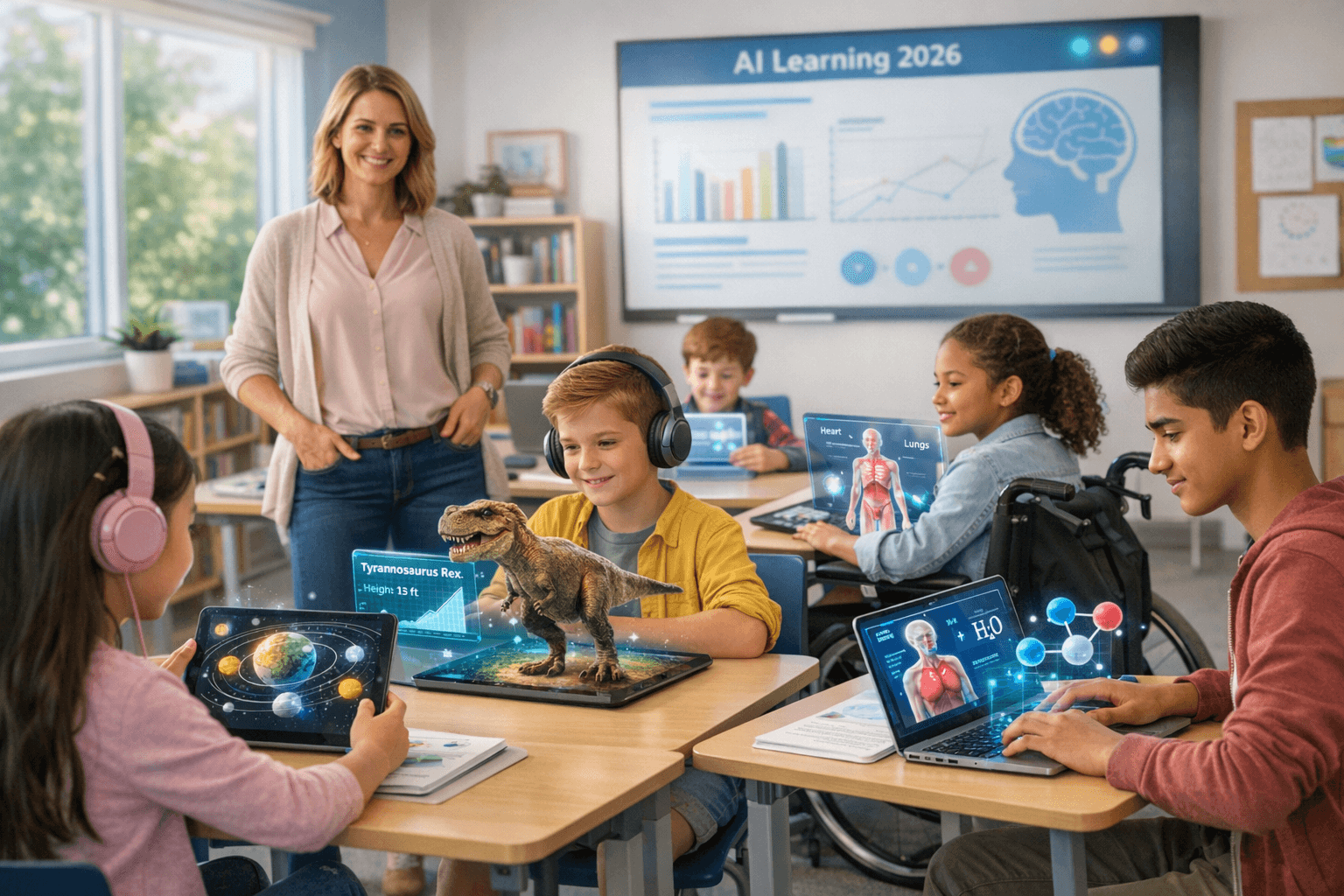
Education is undergoing its most profound transformation in centuries. As we navigate through 2026, artificial intelligence has moved from experimental pilot programs to mainstream classrooms, fundamentally reshaping how students learn, teachers instruct, and knowledge is acquired. This isn't science fiction—it's happening right now in schools across the globe, and the results are remarkable.
The promise of personalized education has long been a dream of educators: imagine every student receiving instruction perfectly tailored to their unique learning style, pace, and interests. For decades, this remained impractical—one teacher simply cannot create 30 different lesson plans for 30 different students. But AI has changed the equation entirely. Today's intelligent learning systems can adapt in real-time to each student's needs, providing the kind of individualized attention that was once only available through expensive private tutoring.
This revolution extends far beyond simple automation. We're witnessing the emergence of truly adaptive learning environments that understand not just what a student knows, but how they learn best. The implications for educational equity, student engagement, and learning outcomes are staggering.
Understanding Individual Learning: AI's Adaptive Intelligence
Every student learns differently. Some grasp concepts through visual demonstrations, others through hands-on practice, and still others through reading and reflection. Traditional classroom instruction, constrained by time and resources, typically delivers content in a one-size-fits-all format. AI-powered learning systems have shattered this limitation.
Modern adaptive learning platforms continuously analyze how students interact with material. When a student struggles with a particular concept, the AI doesn't simply repeat the same explanation—it recognizes the struggle and automatically adjusts its approach. If visual learners aren't connecting with text-based explanations, the system might present an animated diagram or interactive simulation instead. For students who need more time to process information, the AI slows down, provides additional examples, and offers more practice opportunities before moving forward.
This adaptation happens across multiple dimensions simultaneously:
- Pacing: Students who quickly master concepts can accelerate through material, while those needing more time receive it without feeling rushed or left behind.
- Content presentation: The same concept might be explained through text, video, interactive exercises, real-world examples, or gamified challenges depending on what resonates with each learner.
- Difficulty progression: AI systems identify the optimal challenge level—hard enough to promote growth but not so difficult as to cause frustration and disengagement.
- Learning pathways: Rather than following a rigid curriculum sequence, students can explore topics in orders that make sense for their existing knowledge and interests.
Perhaps most importantly, these systems learn and improve over time. The more a student interacts with the platform, the better it understands their unique learning profile and can predict what approaches will be most effective.
AI in Action: Real-World Learning Platforms Transforming Classrooms
The theoretical benefits of AI-powered education are compelling, but what matters most is real-world impact. Across the educational landscape, we're seeing remarkable results from schools and districts that have embraced these technologies.
Khan Academy's Khanmigo has evolved into one of the most sophisticated AI tutoring systems available. Rather than simply providing answers, Khanmigo acts as a Socratic tutor, asking probing questions that guide students toward understanding. When a student struggles with a math problem, the AI doesn't solve it for them—it breaks down the problem into smaller steps, identifies where the confusion lies, and helps the student work through their misconceptions. Teachers report that students using Khanmigo show significantly improved problem-solving skills and mathematical reasoning.
Carnegie Learning's MATHia platform has been deployed in thousands of schools, with impressive results. The system uses cognitive science principles combined with AI to create truly personalized learning experiences. In one Pennsylvania school district, students using MATHia showed 30% greater improvement in standardized test scores compared to traditional instruction. More importantly, student surveys revealed increased confidence and reduced math anxiety—outcomes that extend far beyond test performance.
Duolingo's AI-powered language learning has made language acquisition accessible to millions. The platform's AI analyzes patterns in how users learn vocabulary and grammar, then optimizes review schedules and lesson content accordingly. Schools incorporating Duolingo into their language programs report that students achieve conversational proficiency 50% faster than with traditional textbook-based instruction.
In higher education, platforms like Century Tech are helping university students master complex subjects. The system identifies knowledge gaps and creates personalized study plans that address weaknesses while building on strengths. Universities using Century Tech report improved retention rates and student satisfaction, particularly in challenging STEM courses where dropout rates have historically been high.
Leveling the Playing Field: AI for Diverse Learning Needs
Perhaps the most transformative impact of AI in education is its potential to support students with diverse learning needs. For students with disabilities, learning differences, or those who have fallen behind, AI-powered tools are proving to be genuine game-changers.
For students with dyslexia, AI reading assistants can adjust text presentation in real-time—modifying font styles, spacing, and color contrasts to optimize readability. Text-to-speech features with natural-sounding voices help these students access written content without the frustration that often accompanies traditional reading. The AI can also identify when a student is struggling with specific word patterns and provide targeted phonics practice.
Students with ADHD benefit from AI systems that break learning into shorter, more manageable segments and provide frequent engagement prompts. These platforms can detect when attention is waning (through interaction patterns) and introduce brief interactive elements or suggest short breaks before continuing. The gamification elements many AI platforms incorporate—earning points, unlocking achievements, progressing through levels—provide the immediate feedback and reward structures that help ADHD students stay motivated.
For students on the autism spectrum, AI tutors offer a consistent, predictable learning environment free from the social complexities that can make traditional classroom settings challenging. These students can learn at their own pace without the pressure of keeping up with peers or the anxiety of being called on unexpectedly. Many report feeling more comfortable asking AI tutors questions they might hesitate to ask human teachers.
English language learners receive tremendous support from AI systems that can provide instant translations, explain idioms and cultural references, and adjust language complexity based on proficiency level. These students can learn subject matter content while simultaneously improving their English skills, rather than being held back by language barriers.
The beauty of AI-powered personalization is that it doesn't require students to be formally diagnosed or labeled. The system simply adapts to whoever is using it, providing the support each individual needs without stigma or special accommodations that might make students feel different from their peers.
Addressing the Concerns: Privacy, Over-Reliance, and Equity
As with any transformative technology, the integration of AI into education raises legitimate concerns that deserve serious consideration. A balanced approach requires acknowledging these challenges while working toward solutions.
Privacy and Data Security
AI learning systems collect vast amounts of data about students—their learning patterns, struggles, progress, and even the times of day when they're most focused. This raises important questions about data privacy and security. Who owns this data? How long is it retained? Could it be used in ways that harm students?
Responsible implementation requires robust data protection policies. Leading educational AI platforms now employ end-to-end encryption, strict access controls, and transparent data usage policies. Many jurisdictions have enacted student data privacy laws that limit how educational data can be collected and used. Parents and educators should insist on platforms that comply with regulations like FERPA (in the US) or GDPR (in Europe) and that provide clear opt-out options.
The Risk of Over-Reliance
There's a valid concern that students might become overly dependent on AI assistance, potentially undermining the development of critical thinking and problem-solving skills. If students can always turn to an AI tutor for help, will they develop the persistence and resilience that comes from struggling with difficult problems?
The solution lies in thoughtful implementation. The best AI educational tools are designed to guide rather than simply provide answers. They encourage students to think through problems, make mistakes, and learn from those mistakes. Teachers play a crucial role here, helping students understand when to use AI assistance and when to work independently. The goal should be AI as a learning scaffold—support that helps students reach higher levels of understanding, not a crutch that prevents them from developing their own capabilities.
Equity and Access
Perhaps the most pressing concern is that AI-powered education could exacerbate existing inequalities. If only wealthy schools and families can afford advanced AI learning tools, we risk creating an even wider achievement gap between privileged and disadvantaged students.
This is a real risk that requires proactive solutions. Many organizations are working to democratize access to AI education tools. Khan Academy's Khanmigo, for instance, is being offered at reduced or no cost to Title I schools serving low-income students. Government initiatives in several countries are funding AI learning platforms for public schools. Open-source AI educational tools are emerging that schools can implement without expensive licensing fees.
Ensuring equitable access to AI-enhanced education must be a priority. This means not just providing the technology, but also ensuring adequate internet connectivity, devices, and teacher training in underserved communities.
Teachers Remain Essential: The Human Element in AI-Enhanced Learning
A common fear is that AI will replace teachers. This fundamentally misunderstands both the capabilities of AI and the nature of teaching. The reality is quite different: AI is amplifying teachers' effectiveness and allowing them to focus on the aspects of education that require human connection, creativity, and emotional intelligence.
When AI handles routine tasks—grading multiple-choice assessments, providing basic content explanations, tracking student progress—teachers gain time for higher-value activities. They can have meaningful one-on-one conversations with students, facilitate collaborative projects, mentor struggling learners, and design creative learning experiences that AI cannot replicate.
AI analytics provide teachers with unprecedented insights into student learning. Rather than relying on periodic tests to gauge understanding, teachers can see real-time data showing exactly where each student is struggling. This allows for timely, targeted interventions. A teacher might notice that several students are having difficulty with a particular concept and can address it immediately in class, rather than discovering the problem weeks later on a test.
Teachers also play a critical role in helping students develop skills that AI cannot teach: emotional regulation, social collaboration, ethical reasoning, creativity, and the kind of deep critical thinking that goes beyond problem-solving. These uniquely human capabilities become even more important in an AI-enhanced world.
The most effective educational environments combine AI's personalization capabilities with teachers' expertise, empathy, and ability to inspire. This partnership—human teachers supported by AI tools—represents the future of education, not AI replacing teachers.
Practical Tips: Leveraging AI Learning Tools Effectively
For students and parents looking to take advantage of AI-powered learning, here are practical strategies to maximize benefits while avoiding potential pitfalls:
For Students
- Use AI as a tutor, not a shortcut. When you're stuck on a problem, ask the AI to guide you through the thinking process rather than just giving you the answer. Most AI tutors are designed to do this—take advantage of it.
- Be honest about what you don't understand. AI systems adapt based on your responses. If you pretend to understand something you don't, the AI will move on and you'll fall further behind. There's no judgment from an AI tutor—use that to your advantage.
- Experiment with different learning modes. If a video explanation isn't clicking, try the interactive exercise or text explanation. AI platforms offer multiple ways to learn the same concept—explore them.
- Set specific learning goals. Rather than aimlessly browsing, decide what you want to accomplish in each session. Many AI platforms allow you to set goals and track progress toward them.
- Balance AI learning with human interaction. Don't isolate yourself with AI tools. Discuss what you're learning with classmates, teachers, and family. Explaining concepts to others reinforces your own understanding.
For Parents
- Research platforms carefully. Look for AI learning tools with strong privacy policies, age-appropriate content, and evidence of educational effectiveness. Read reviews from other parents and educators.
- Monitor usage without micromanaging. Check in periodically on what your child is learning and how they're progressing, but avoid hovering. Part of the benefit of AI learning is that students can work independently.
- Communicate with teachers. Let your child's teachers know what AI tools they're using at home. Teachers can provide guidance on how to integrate these tools with classroom learning.
- Encourage a growth mindset. Help your child understand that AI tools are there to support learning, not to make everything easy. Struggle and mistakes are part of the learning process.
- Start with free resources. Before investing in expensive platforms, explore high-quality free options like Khan Academy, Duolingo, or your school's provided resources. Many paid platforms offer free trials—use them to evaluate fit.
Looking Ahead: The Next Evolution in Personalized Learning
As impressive as current AI educational tools are, we're still in the early stages of this revolution. The next few years promise even more transformative developments.
Multimodal AI systems that can understand and respond to voice, text, images, and even student emotions are on the horizon. Imagine an AI tutor that can detect frustration in a student's voice and adjust its approach accordingly, or that can analyze a student's handwritten work and provide feedback on both content and technique.
Virtual and augmented reality integration will create immersive learning experiences personalized by AI. Students might explore ancient Rome with an AI guide that adapts the tour based on their interests, or conduct virtual chemistry experiments where the AI adjusts complexity based on their skill level.
Predictive analytics will become more sophisticated, identifying potential learning difficulties before they become serious problems. AI might notice subtle patterns suggesting a student is at risk of falling behind and alert teachers to intervene early.
Lifelong learning companions may emerge—AI systems that follow learners from elementary school through university and into their careers, building a comprehensive understanding of their learning journey and continuously adapting to support their growth.
The ultimate promise of AI in education is not just improved test scores or more efficient learning, though those are valuable. It's the possibility of unlocking human potential on an unprecedented scale. When every student receives the personalized support they need to thrive, when learning differences become strengths rather than obstacles, when education adapts to the learner rather than forcing learners to adapt to a rigid system—that's when we'll truly transform education.
We stand at a remarkable moment in educational history. The tools we're developing today will shape how generations learn, grow, and reach their potential. By embracing AI thoughtfully—celebrating its capabilities while remaining mindful of its limitations and risks—we can create an educational future that is more personalized, more effective, and more equitable than ever before. The future of learning is here, and it's adapting to each of us, one student at a time.
Muhd