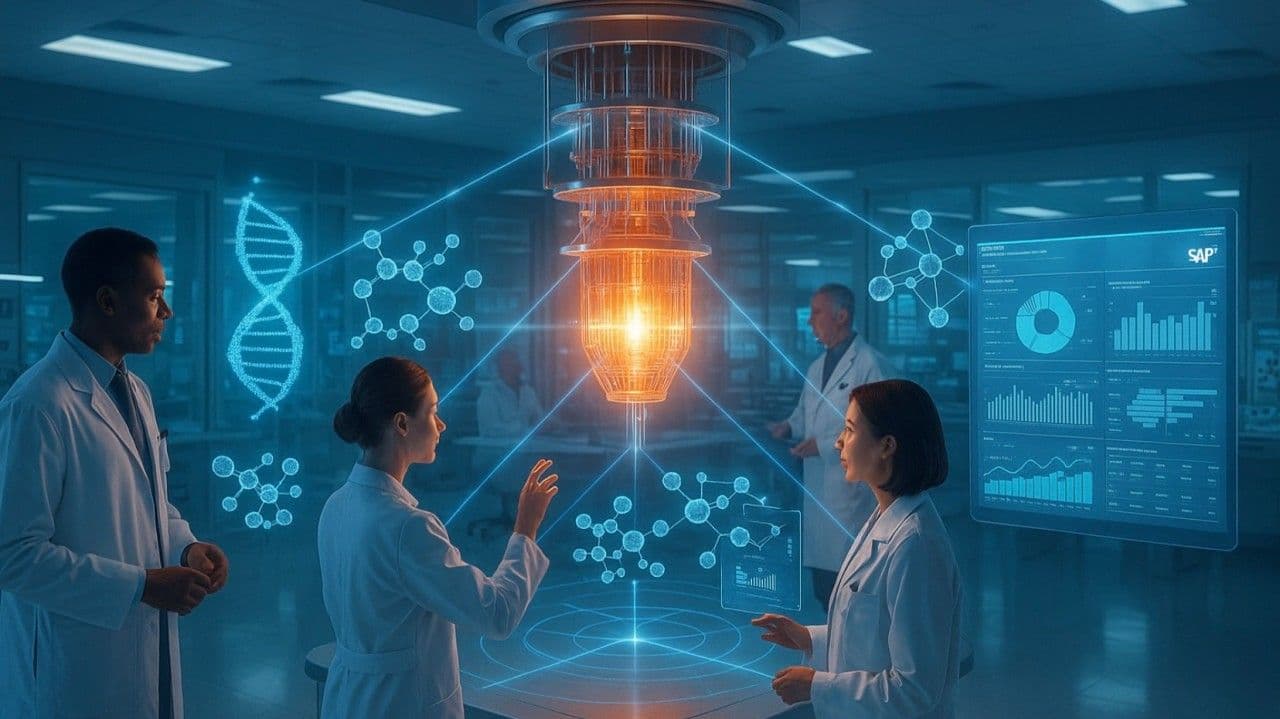
How AI and Quantum Computing Are Redefining the Future

The technology landscape is undergoing a massive shift, driven by the convergence of Artificial Intelligence and Quantum Computing. As we move through 2026, these two fields are no longer developing in isolation; they are actively merging to create a new computing paradigm.
This year marks a critical inflection point where theoretical concepts are transitioning into practical, widespread applications. Industry leaders like IBM and Microsoft are pointing to 2026 as the year quantum computers may first outperform classical systems on specific tasks, unlocking breakthroughs in materials science, drug discovery, and financial modeling. At the same time, AI is evolving from a helpful tool into an autonomous teammate, with "Agentic AI" systems capable of orchestrating complex workflows and even participating directly in scientific research.
The future of technology will likely be defined by hybrid architectures that seamlessly integrate AI, supercomputing, and quantum processors to solve some of the world's most complex challenges.
The Convergence of AI and Quantum Computing
The technology sector in 2026 is being defined by a powerful synergy: the integration of Artificial Intelligence with Quantum Computing. This hybrid approach is set to redefine what is possible across multiple industries.
KEY TRENDS TO WATCH
The Rise of Agentic AI AI is moving beyond simple chat interfaces and personal productivity tools. We are now seeing the deployment of "Agentic AI"—systems that can autonomously pursue goals, orchestrate complex tasks, and adapt their strategies based on feedback.
Quantum Advantage Companies like IBM have projected that 2026 will be the first time a quantum computer outperforms a classical computer on specific, highly complex problems. This milestone is expected to accelerate advancements in fields like molecular simulation and cryptography.
Hybrid Computing Architectures The future is not about one single type of computing replacing another. Instead, we are moving toward hybrid systems where AI coordinates workloads across classical supercomputers and quantum processors, maximizing efficiency and capability.
The Push for Post-Quantum Cryptography As quantum computing advances, the need to protect sensitive data from future quantum attacks becomes critical. Developing "quantum-safe" encryption methods is now a top priority for governments and financial institutions worldwide.
Muhd